Tony Smyth
- English Discussion Partner
- Author
- Business Analyst
Author of Fukushima and the Coming Tokyo Earthquake: and what it will mean for a fragile world economy.
Improve your English through intelligent conversations about the issues shaping our world—economics, energy, geopolitics, technology and society.

About Me
I am an Irish citizen who has spent most of my adult life in Japan since first arriving in 1980. Throughout my career I have worked in professions built around communication: English education, public speaking, counselling, and business analysis.
I co-founded an English school in Tokyo, worked as a wedding celebrant in Japanese for fifteen years, and counselled English-speaking clients using NLP and hypnotherapy.
For many years I have studied economics, geopolitics, energy systems, history, and global trends. These interests eventually led me to write and publish my book on Fukushima, energy, economics, and the future challenges facing modern societies.
About My Book
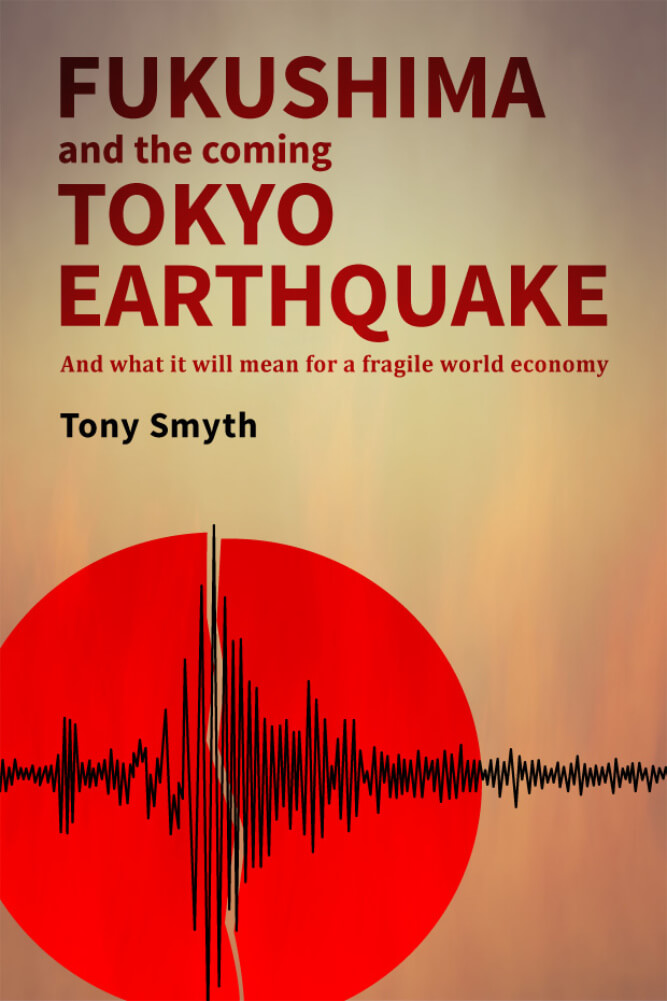
Fukushima and the coming Tokyo Earthquake: and what it will mean for a fragile world economy.
This book examines the 2011 Fukushima disaster, the risks—both within Japan and for the global economy—of a future Tokyo earthquake, and the relationship between energy, economics, technology, and societal change. Drawing on research from multiple disciplines, it explores the long-term forces shaping business, society, and the global economy.
discussion topics:
We can explore a wide range of issues and practical communication themes, depending on your interests and goals:
Global Affairs
- Geopolitics
- International relations
- Demographic change
- Energy security
- Climate change
- The emerging multipolar world
Economics & Business
- Global trade
- Economic history
- AI and robotics
- Digital currencies
- Future business trends
Society & Culture
- Education
- Media
- Social change
- Cross-cultural communication
Presentation Practice
- Business presentations
- Conference talks
- Interview preparation
- Public speaking
Who I Work With:
Clients typically include:
Japanese Professionals
Japanese professionals with an intermediate to advanced level of English.
Business Presenters
Business people preparing for presentations or international meetings.
Lifelong Learners
Lifelong learners interested in economics, geopolitics, technology, and global affairs.
Advanced Speakers
People who want deeper, more complex conversations than those offered in typical English lessons.
Book a Free Introductory Conversation
Sessions are informal, one-to-one conversations conducted entirely in English. Together we explore topics that interest you while improving fluency, vocabulary, confidence, and critical thinking.
PERSPECTIVES
From time to time I write about subjects that I believe are important for understanding our complex, ever-changing world. These essays explore topics such as energy, economics, geopolitics, technology and society. They draw on years of reading and research and reflect the themes that often arise in my discussions with clients.
The Hidden Economics of Energy: Understanding EROI
This article explores some of the ramifications of the world’s declining energy resources, especially in relation to Energy Returned on Energy Invested (EROI).
The concept of EROI was proposed by US fisheries ecologist Charles Hall, who noted that the energy a predator gained from eating prey had to exceed the energy expended in catching it. In 1981, Hall applied this net energy analysis to power generation activities, charting the declining EROI of US oil as increasingly intensive drilling was required to produce the same quantity of oil. Hall also suggested that oil extraction could eventually require more energy than the oil itself provides.
EROI is a measure of the net energy produced by an energy source. It compares the amount of usable energy delivered to society with the amount of energy required to build, operate, maintain, and eventually decommission that energy system. The higher the EROI, the more surplus energy is available to support a nation’s economy. Conversely, the lower the EROI, the more energy must be invested in extracting and processing the resource, whether fossil fuel or renewable energy. As a result, less surplus energy remains available to power the rest of society. The concept is becoming increasingly important as reserves of easy-to-extract fossil fuels decline.This in turn will constrain our ability to extract and process vital mineral resources.
The key idea is net energy, not just gross energy. A society needs surplus energy to support everything beyond energy production itself—healthcare, education, manufacturing, transport, research, the arts, and so on. It is this surplus energy that allows us to heat or cool our homes, have efficient and cheap transportation systems, have food grown and delivered over long distances and available in our supermarkets, take cheap budget-airline holidays, and enjoy countless other luxuries that most in developed countries take for granted.Economic development has always depended on access to energy, mineral resources, and fertile land. Indeed, we have created an economic system that assumes the ability to continually grow and to do so in an exponential manner. Until recently, there has been no reason to question this economic model as GDP, incomes, and most other measures of economic growth have grown steadily over the past century. However, as we are entering the era of peak oil and subsequent decline, for the first time in history we may be asked to grow the economy, as oil consumption simultaneously decreases. An economy growing at 3% annually doubles in size in roughly 24 years, implying a corresponding increase in energy and material throughput.
This continual growth assumption, developed during a period of physical plenty when abundant cheap energy could be taken for granted, is now being increasingly shaken by declines in fossil fuel availability and decreasing ease of extraction, with knock-on effects on our ability to mine and process essential ores such as copper, uranium and gold. In the 1930s the EROI of oil was around 100:1 (100 units of energy gained for every 1 unit invested). This meant the net return was 99. If, in the near future, we have an oilfield with an EROI of only 5:1, one barrel-equivalent of energy invested would produce five barrels of oil, leaving a net gain of only four barrels.
We would invest one barrel of oil but only receive 4 barrels back. Such a ratio would be insufficient to support our energy-hungry modern civilisation.
These days the EROI of oil is closer to an average of 10-20:1 (depending on the field, sometimes less than 10:1), and much lower for tar sands such as those in Canada (3:1). For deep-water drilling, the EROI can be significantly lower, sometimes dropping to 3:1 or 5:1, due to the increased energy required for extraction and processing.More and more energy needs to be re-invested into obtaining oil, leaving an ever smaller surplus for the rest of the economy.Global economic growth has been relatively modest over the past decade. Of course, many factors have contributed, including inflation, geopolitical conflict, supply-chain disruptions, rising debt levels, and the lingering effects of the pandemic. Nevertheless, most of these factors are connected, directly or indirectly, to the declining availability of cheap energy.
So, given these trends, one might expect declining EROI to feature far more prominently in economic forecasting and public policy. Falling net energy implies slower GDP growth, reduced tax revenues, and increasing pressure on governments to maintain complex infrastructure and public services. Yet EROI remains largely absent from mainstream economic discussion.
The ‘picked low-hanging fruit’ analogy also applies to other key resources such as copper, sand, lithium, nickel and iron ore.
The world is running on minerals it cannot produce fast enough. From batteries powering electric vehicles to the components inside wind turbines and military systems, the demand for lithium, cobalt, nickel, and rare earth elements has surged well beyond what existing mining infrastructure can comfortably supply.
Most mainstream economists, like much of the financial community, failed to anticipate the 2008 financial crisis. Many also continue to treat the economy largely independently of the environmental and energy systems on which it ultimately depends.They fail to grasp that persistent slow growth is symptomatic of the economy’s intensifying overshoot of the natural limits of those systems. No amount of quantitative easing, deregulation, and austerity can address the endless-growth model’s dependence on unlimited exploitation of planetary resources – and the latter’s accelerating depletion.If AI fulfils its promise of making exploration, extraction and mining significantly more efficient, it may accelerate the depletion of the highest-quality energy and mineral resources. Rather than improving long-term resource availability, greater efficiency could simply hasten the decline in average resource quality and therefore contribute to falling EROI over time.
Most economic models treat energy as just another input to production rather than the indispensable physical foundation of all economic activity.Although energy is discussed in some business courses, it is rarely treated as the biophysical foundation on which all economic activity ultimately depends. As a result, concepts such as EROI and net energy have received relatively little attention compared with labour, capital, interest rates, inflation and monetary policy.Whether Keynesian, Monetarist, Rational Expectations, Real Business Cycle or New Keynesian, most schools of economics share one implicit assumption: that economies will ultimately return to growth, generating rising GDP, expanding profits and increasing shareholder value. In fact, most fail to recognise the important implications of the graph below:
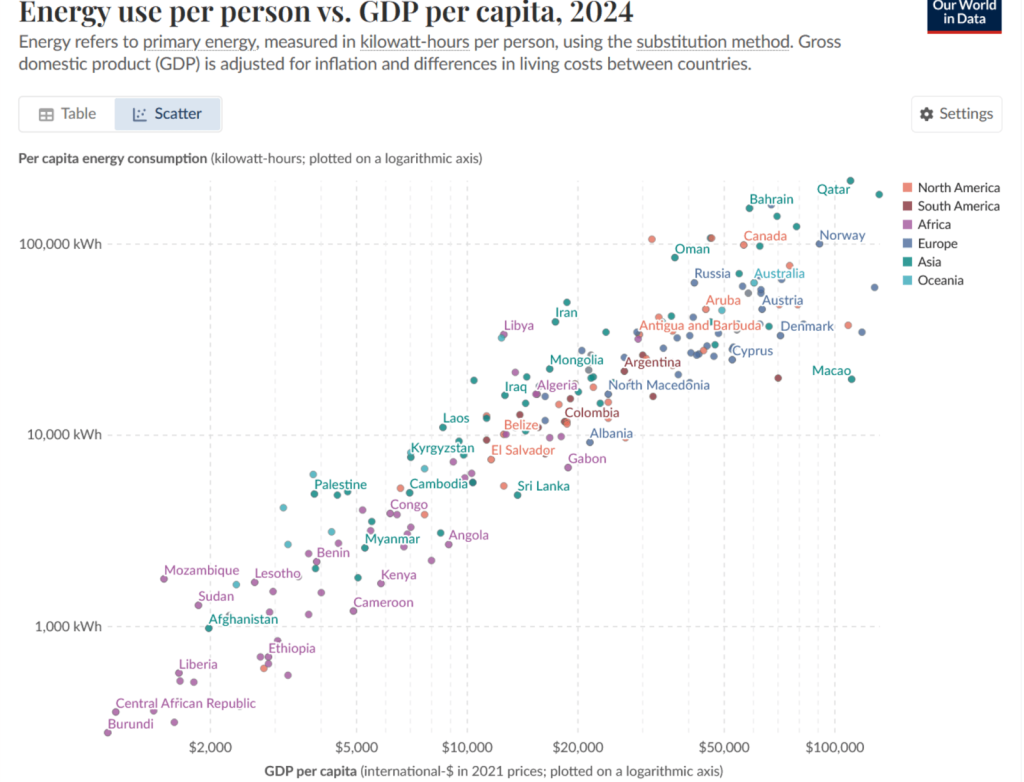
The graph shows a remarkably close relationship between energy consumption and GDP growth. If that relationship continues to hold, declining net energy availability is likely to constrain future economic growth.
Energy is the master resource. Oil, and other fossil fuels, are a one-off gift of stored sunlight, created over aeons. A gift that far too few appreciate. A gift that is being squandered foolishly. It would take the average human five years of hard labour to do the ‘work’ of one barrel of oil, yet that barrel has traded, until recently, at $70-75 a barrel. Surely this key resource is seriously underpriced and undervalued given its vital importance in maintaining our comfortable lifestyles (at least in the industrialised countries)?
Oil, more than any other energy source, is vital to today’s economies because of its ubiquitous application as nearly the only transportation fuel, as a portable and flexible carrier, and as feedstocks for manufacturing and industrial production.Oil is also a vital feedstock for the petrochemical industry. Thousands of everyday products—from plastics and synthetic fibres to pharmaceuticals, solvents and fertilisers—depend on petroleum. Some estimates put the number of products derived wholly or partly from oil at more than 6,000. Historically, sharp increases in oil prices have preceded many major recessions, suggesting that energy costs play a central role in economic downturns.
At this point, renewable energy needs to be mentioned: While is true that, since 2000, the share of renewables in global electricity has grown from 19% to over 30%, largely due to a surge in solar and wind energy usage, despite these impressive gains, there is considerable debate over whether renewable energy systems alone can sustain today’s highly energy-intensive global economy, particularly given their dependence on fossil fuels, storage technologies and critical mineral supply chains.
Now, it is certainly true that renewables, especially solar panels and wind power, have become much more efficient in delivering energy, and prices for solar panels have dropped significantly in the last decade. Additionally, batteries have seen huge improvements in efficiency, density and durability, with costs far cheaper than a decade ago. This in turn has led to EVs becoming popular and affordable, especially in Asia and Europe. However, there are serious caveats to the ‘renewables as saviour’ narrative: renewables depend on fossil fuels for their manufacture and delivery to site, and also, critical minerals needed for their fabrication are in short supply.
These systems are also intermittent, because wind and sun are not constantly available. For EV batteries, lithium, graphite, cobalt and nickel are all in short supply. For all the minerals that our complex societies requires, demand is set to outpace supply by 2030 and 2040, with the most pronounced divergence being in lithium and graphite.Silver is also used in EVs and advanced batteries, as well as in solar panel manufacture. Annual industrial demand for silver has recently exceeded annual mine production, with the shortfall being met from above-ground stocks and recycling.
An additional problem is that only a handful of countries contain these critical mineral reserves: the Democratic Republic of Congo supplies more than 70% of the world’s mined cobalt. Only Chile, Australia, China, Argentina, and the United States contain large stocks of lithium, while China controls approximately 60% of global lithium processing. It also dominates Rare Earth refining, with an even more commanding share. Rare earth elements are indispensable for modern technologies including wind turbines, electric vehicles, semiconductors, defence systems, telecommunications and advanced electronics.
Renewable energy systems currently depend heavily on fossil fuels for mining, refining, manufacturing, transport and installation.
Manufacturing solar photovoltaic modules can be highly carbon-intensive, particularly where electricity is generated from coal. One study found that module production alone produced more than twice the carbon emissions associated with generating an equivalent amount of electricity from natural gas, with silicon purification accounting for much of the difference.
Wind turbine construction also depends on coke for iron smelting, coal and petroleum coke for cement production, natural gas and naphtha for plastics and fibreglass, diesel fuel for ships, trucks and construction equipment, and lubricants for gearboxes, for which there are currently no practical non-fossil alternatives.
My point is not that renewable energy and the move to electrification is not desirable -they are not – but that solar panels and windtowers require fossil fuels for their manufacture, at a time when fossil fuels are becoming harder to extract and refine. To return to a point made previously, the EROI of oil has declined to an average 10:1. The easiest and highest-quality oil resources have largely already been extracted. This is precisely why Shell and BP conduct oil drilling below the Gulf of Mexico and off the coast of Brazil. This means more capital, technology, and energy are required to access new oil compared with the giant onshore fields discovered in the mid-20th century. Drilling is through 2 miles of water and then 2-4 miles of crustal plate beneath the seabed, under extreme pressures and temperatures. These are engineering triumphs, but they are also evidence that the quality and accessibility of resources are declining.
EROI also applies to mineral resources: Just as giant conventional oilfields have given way to deepwater, Arctic and shale developments, mining is increasingly shifting towards deeper, lower-grade and more remote mineral deposits. To give but two examples: average copper ore grades have declined dramatically over the past century, meaning far more rock must be mined and processed per tonne of copper. Likewise, gold producers increasingly exploit lower-grade deposits, processing vast quantities of ore to recover only small amounts of metal.
The same pattern is evident for many vital mineral resources—including nickel, zinc, tin, lithium, phosphate, sulphur, and high-quality iron ore—as extraction increasingly shifts towards deeper, lower-grade, more remote or otherwise more challenging deposits. We are progressively moving down the quality ladder, requiring more energy, more capital, more materials, and more technological sophistication to obtain the same physical output. Obtaining remaining fossil energy and key mineral resources is becoming more costly, more technologically difficult, and more ecologically destructive.
The economy is therefore facing a double EROI challenge: declining net energy from fossil fuels and declining resource quality for the minerals needed to replace them.What will the consequences of humanity rapidly consuming a massive, but dwindling, one-off source of carbon energy, energy which has been painstakingly created by photosynthesis over aeons? What will be the consequences for our civilisation of ever-declining EROI?
Mainstream economists generally believe that continuous economic growth is vital for improving living standards, although there are growing concerns about the sustainability of such growth on a finite planet. Many experts question whether infinite growth is feasible given the limitations of natural resources and environmental impacts. I’d like to briefly summarise the opinions of a few of those experts.
Nate Hagens Ph.D is an American author and host of the podcast The Great Simplification, where he interviews experts in energy, ecology, technology, and the economy to provide a systemic view of the world around us. He emphasizes overshoot, complexity, human behavior, and the interaction of energy, ecology, and finance, and argues that many of the conveniences and freedoms we take for granted in this era of abundant energy surplus will diminish. We move from an era of abundance to one more local and simplified.
Others are more optimistic. Systems thinker Nafeez Ahmed argues that advances in renewable energy, artificial intelligence and new technologies could usher in a new era of energy abundance. Whether these technologies can provide the high-density energy required to manufacture steel, cement, plastics and other essential industrial materials at today’s scale remains an open question.
Another author whose work seems pertinent to this article, even though his famous book was written in the 1970s, is anthropologist Joseph Tainter. His treatise ‘The collapse of complex societies” is still read today. While the book is focused through the ‘lense’ of anthropology, and contains no mention of EROI, its central premise – that civilisations collapse due to their inability to maintain complexity seems pertinent to our world civilisation in the 21st century. By complexity, Tainter was referring to the increasing layers of organisation, specialisation and interdependence that characterise modern civilisation.Tainter’s argument wasn’t that societies collapse because each additional layer of complexity—bureaucracy, infrastructure, military, education, healthcare, regulation, administration—requires resources to sustain. Initially, complexity yields high returns, but eventually the returns diminish while the maintenance costs continue to rise. If the surplus energy supporting that complexity declines, the system becomes increasingly fragile.
In 2026, examples of such complexity include just-in-time manufacturing, global supply chains, container shipping, semiconductor fabrication, cloud computing and AI data centres, smart electricity grids, digital payment systems, international financial markets, large regulatory bureaucracies,deepwater oil extraction, hydraulic fracturing, rare earth mining, and automated logistics. Many of these simply could not exist without abundant, high-quality energy, making it increasingly difficult to maintain today’s level of social and technological complexity.
What will our societies look like in the coming decades? Having examined the evidence on declining fossil fuel sources and EROI, I find myself broadly persuaded by those, such as Nate Hagens, who argue that the coming decades will involve adaptation to a world with lower net energy and, consequently, less economic and social complexity.
I suspect we will gradually see a shift towards more energy-efficient forms of transport, shorter supply chains, and greater emphasis on local production where practical.Food is likely to be grown near to cities to reduce transportation costs because modern industrialised farming is extremely oil-dependent.
For ordinary people, food, transport and heating costs all rise because energy is embedded in almost everything we produce and consume.Unlike many forms of inflation, energy-driven inflation is difficult to control because it affects supply chains throughout the economy simultaneously.
Will humans be able to adapt? Of course: we are an inventive and flexible species when facing periods of major upheaval. Will the coming changes be smooth? This seems very unlikely. Individuals, businesses and governments that have prospered under the current system will naturally resist changes that threaten established interests.At any rate, the coming decades are unlikely to be defined by running out of energy, but by adapting to less net energy.
For two centuries humanity has lived through a unique period made possible by an extraordinary energy windfall. We have become accustomed to treating continual growth, rising complexity and expanding prosperity as the natural order of things. The realisation that this abundance was the temporary consequence of abundant, high-quality fossil energy will increasingly beome clear as this century progresses. If so, understanding EROI is not therefore merely an academic exercise. It is one of the keys to understanding the hidden economics of energy—and perhaps the future direction of civilisation itself.
© 2026 Tony Smyth